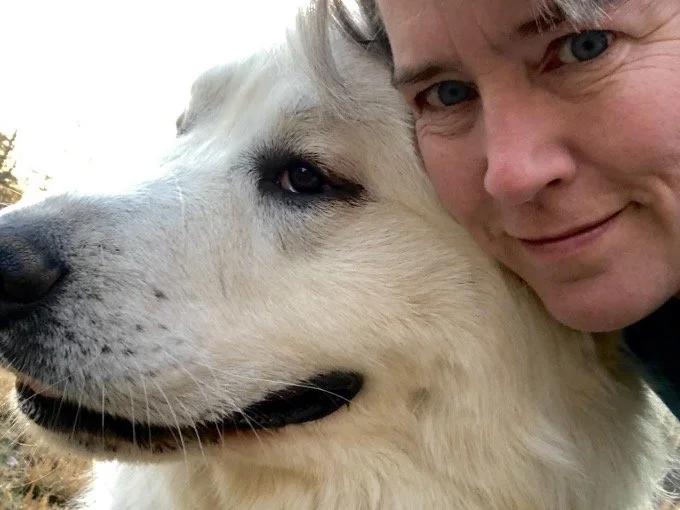
Here at Dry Hollow Farm in western Tennessee, coyotes, wild dogs, and turkey vultures are the most serious threats for our livestock, including goats and free-range chickens. Other regions of the country may add bears and mountain lions to the list of predators threatening in-pasture livestock. Livestock guarding dogs are one answer to these threats.
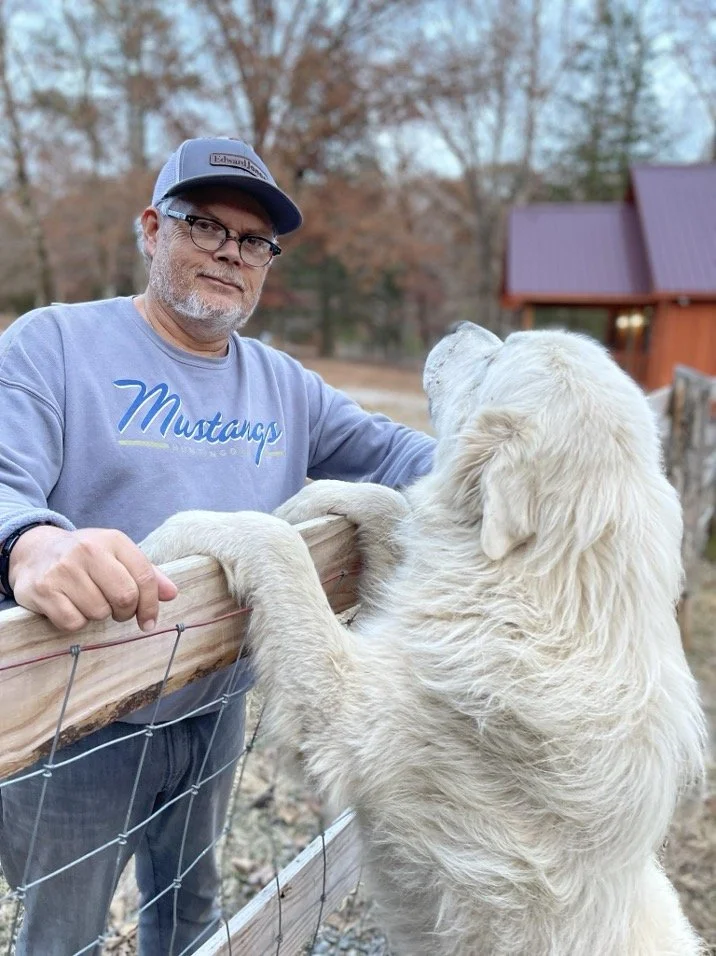
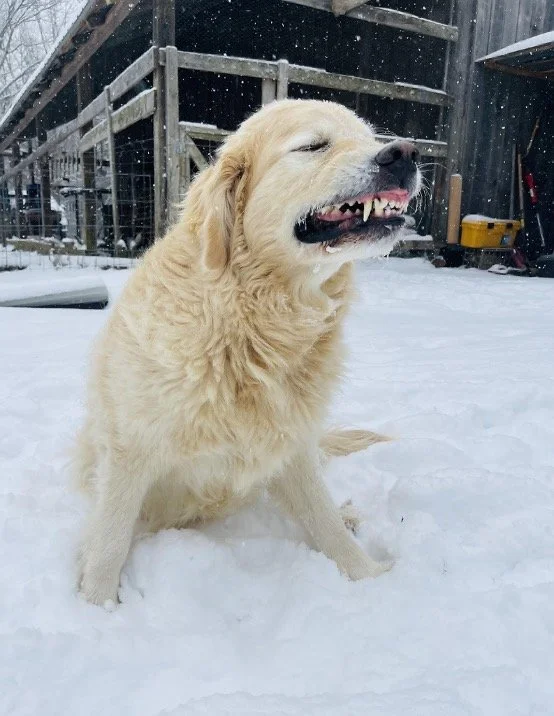
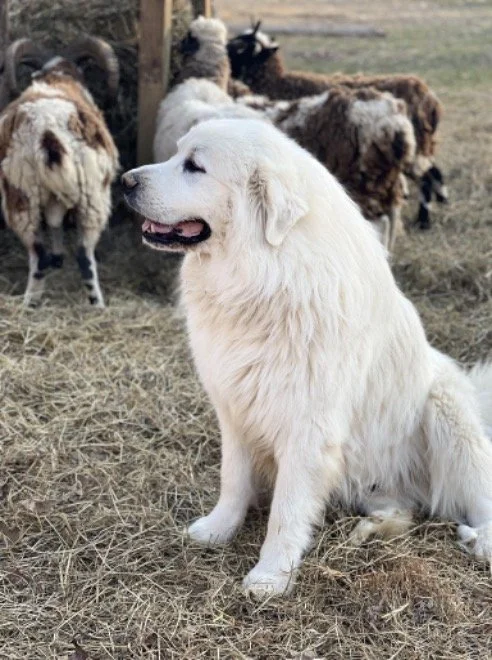
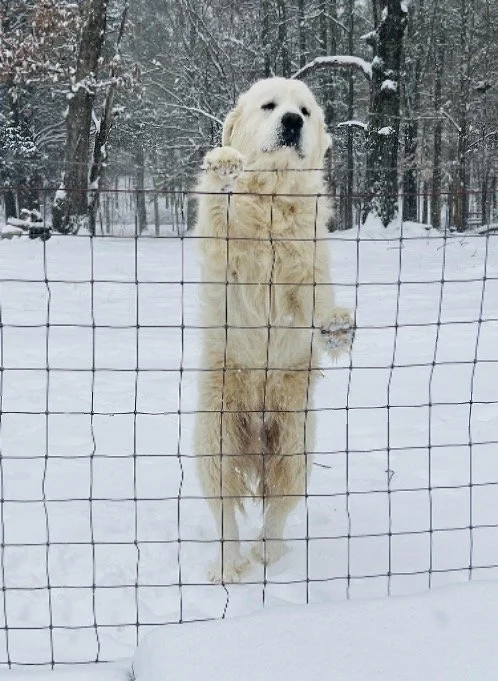
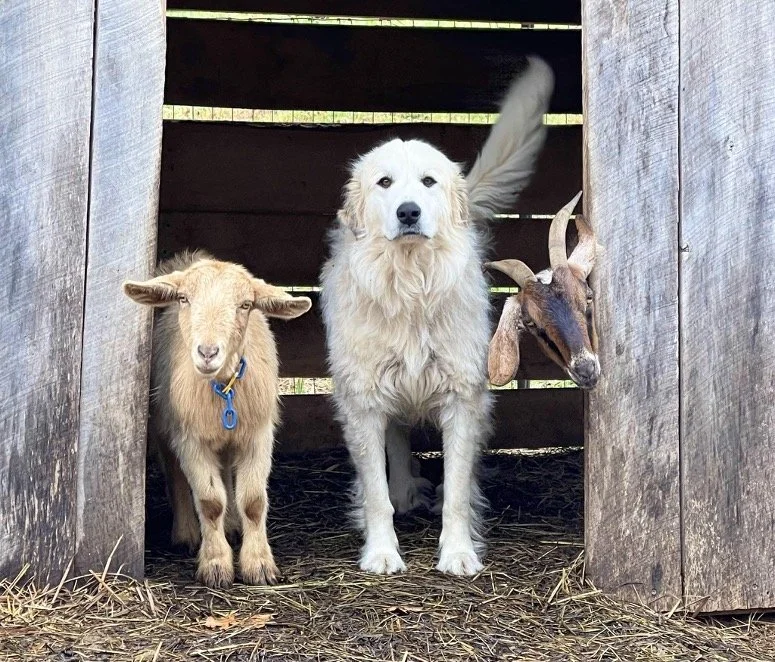
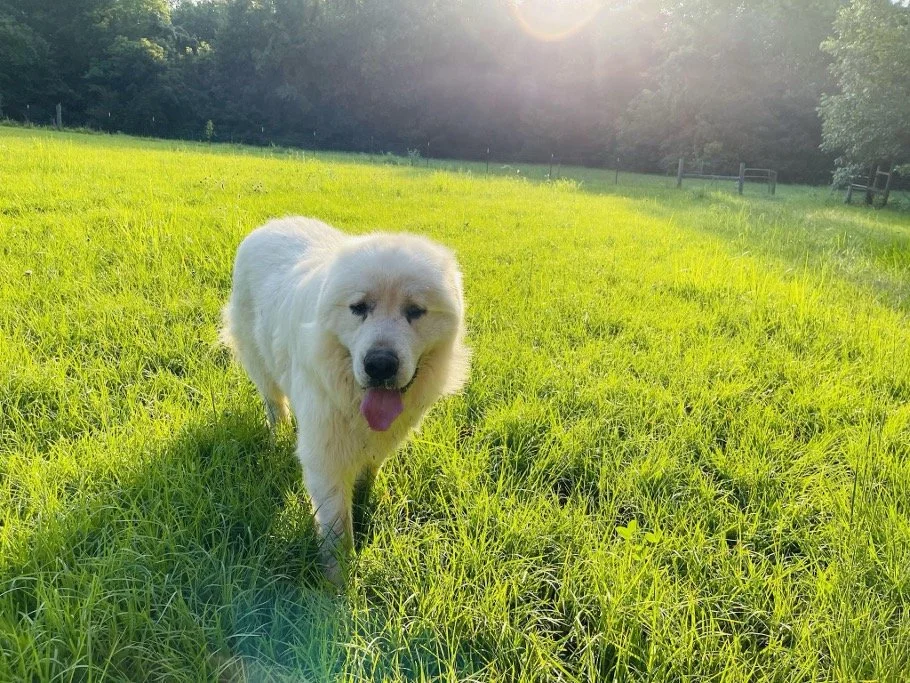
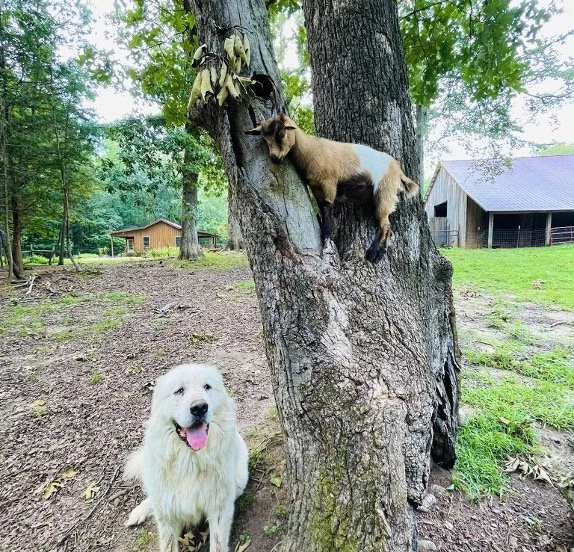
Not long after making our first livestock purchase, we added Great Pyrenees puppies to our farm family. They are working dogs for us, rather than family pets, and have one very specific farm duty - protection!
Many of our farm visitors assume that our Great Pyrenees are engaged in frequent battles with the ever-present coyote packs we hear howling from the surrounding woods and corn fields many nights. This is not true! The protective value of a livestock guarding dog comes from the reality of their presence.
Would they be willing to fight if needed? Of course. And they would win! But normally, physical aggression is not required.
The bark of a Livestock Guarding Dog usually deters all predators. Our largest goat herd pasture is approximately five acres of woods and open fields, and the slightest sound provokes an immediate response as the dogs race to the point of concern, barking up a storm and alerting any living creature that should not be there.
Our dogs make regular circuits of the pasture fence lines, especially at night. As they patrol, they bark intermittently, even if the surrounding woods and fields are silent and still. Why? Their bark alerts predators like coyotes to their presence. When a coyote pack becomes active at night, we listen to their yipping and yapping as they travel an arc around our farm. Although they may sound close, in reality they are giving our fencelines and farm structures a wide berth in order to avoid the guardians they know they cannot defeat.
Turkey vultures also prove a threat to our flock of goats, especially for newborns. These carrion birds have a sense of when a cow, goat, or sheep birth is imminent within a 24-hour window. They will perch at the tops of trees or barns, awaiting the moment when the kid, lamb, or calf emerges from within the amniotic sac - their real target for consumption. Vultures will peck a newborn to death as they consume the amniotic sac and afterbirth.
With this in mind, our Livestock Guarding Dogs alert instantly whenever a large shadow passes across the ground. Any predatory bird quickly disappears when our dogs aggressively bark and chase the flight trajectory.
Our Great Pyrenees are valued members of our farm family. We take care of their basic needs, and in return, they protect each and every one of us.