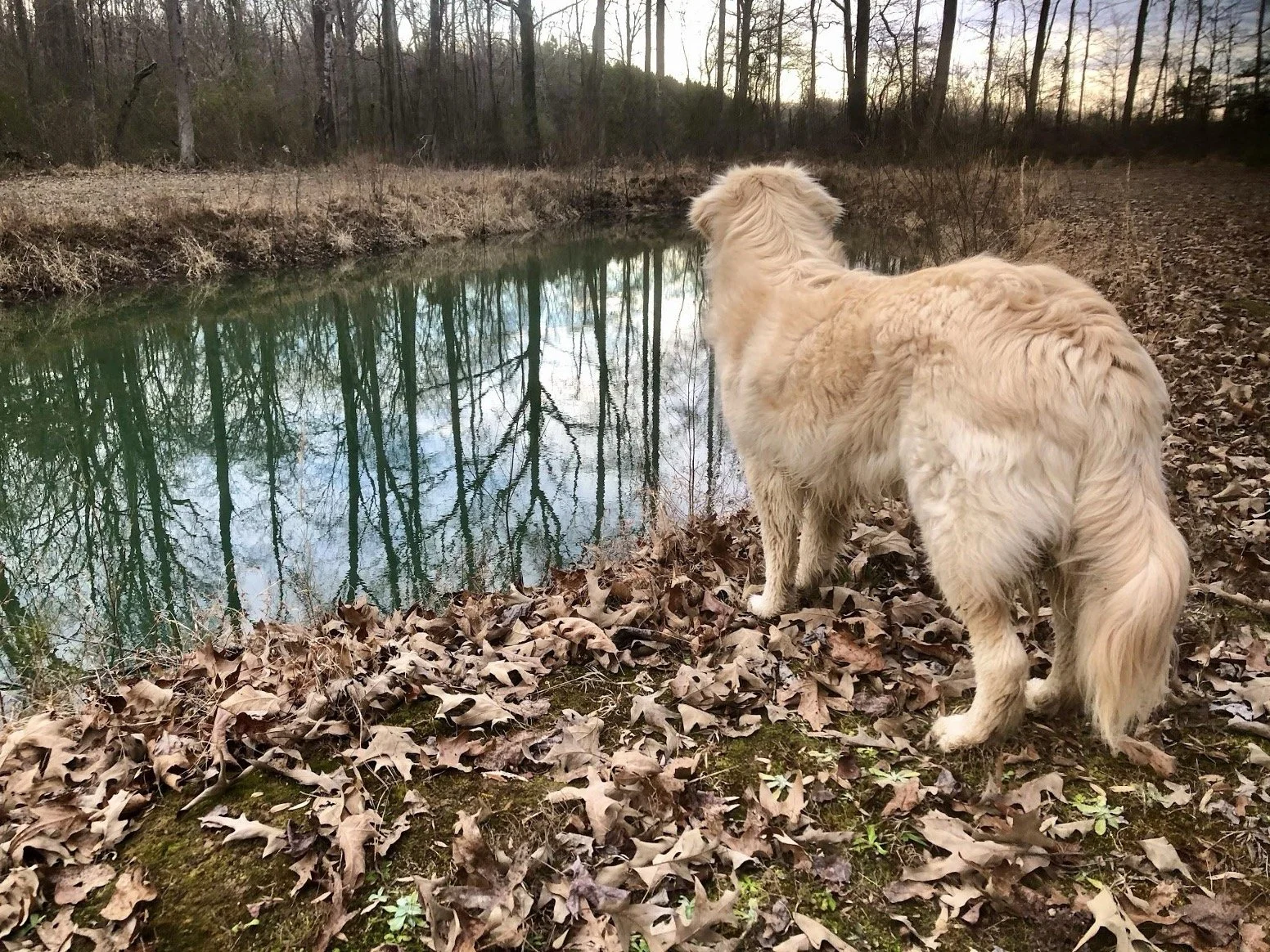
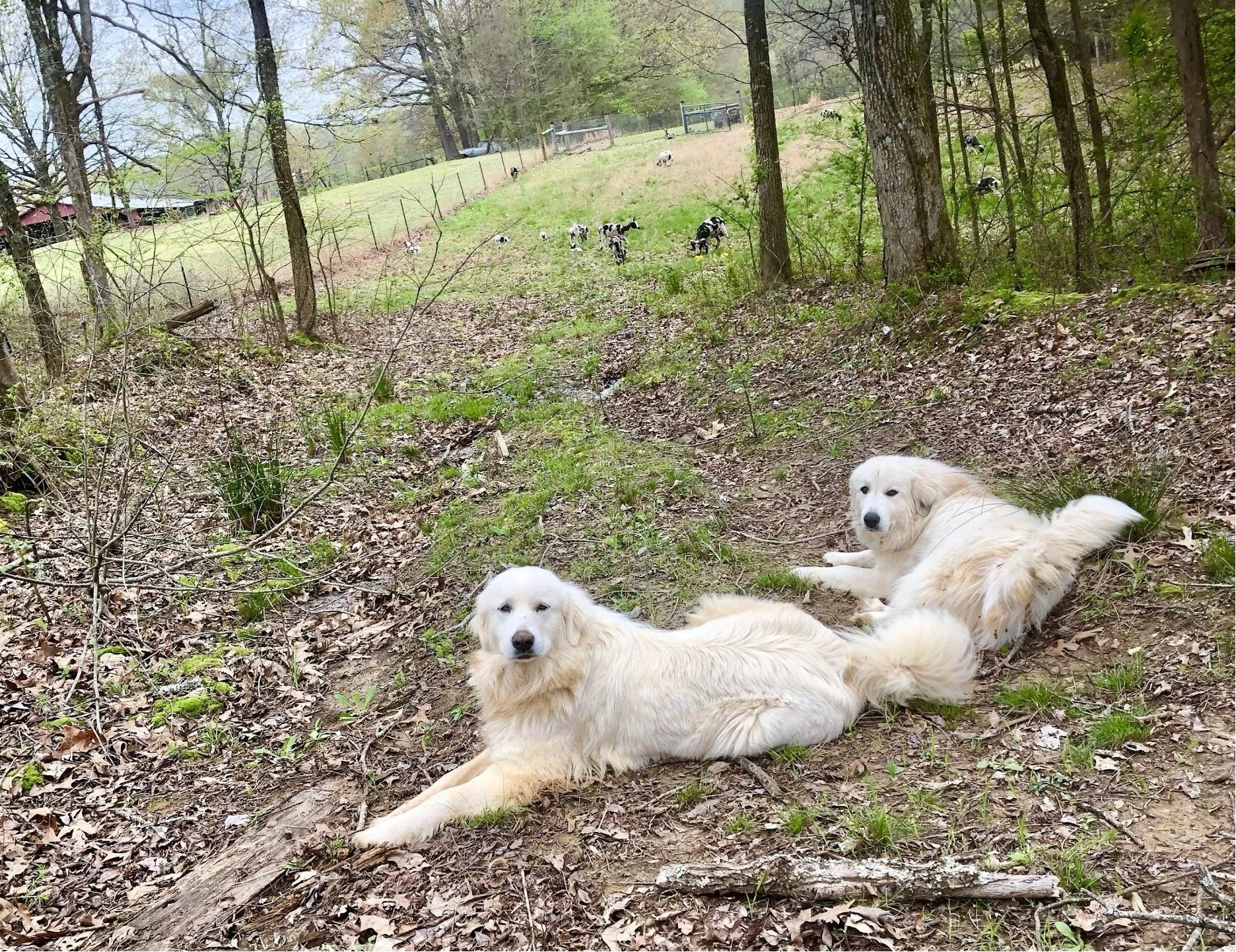
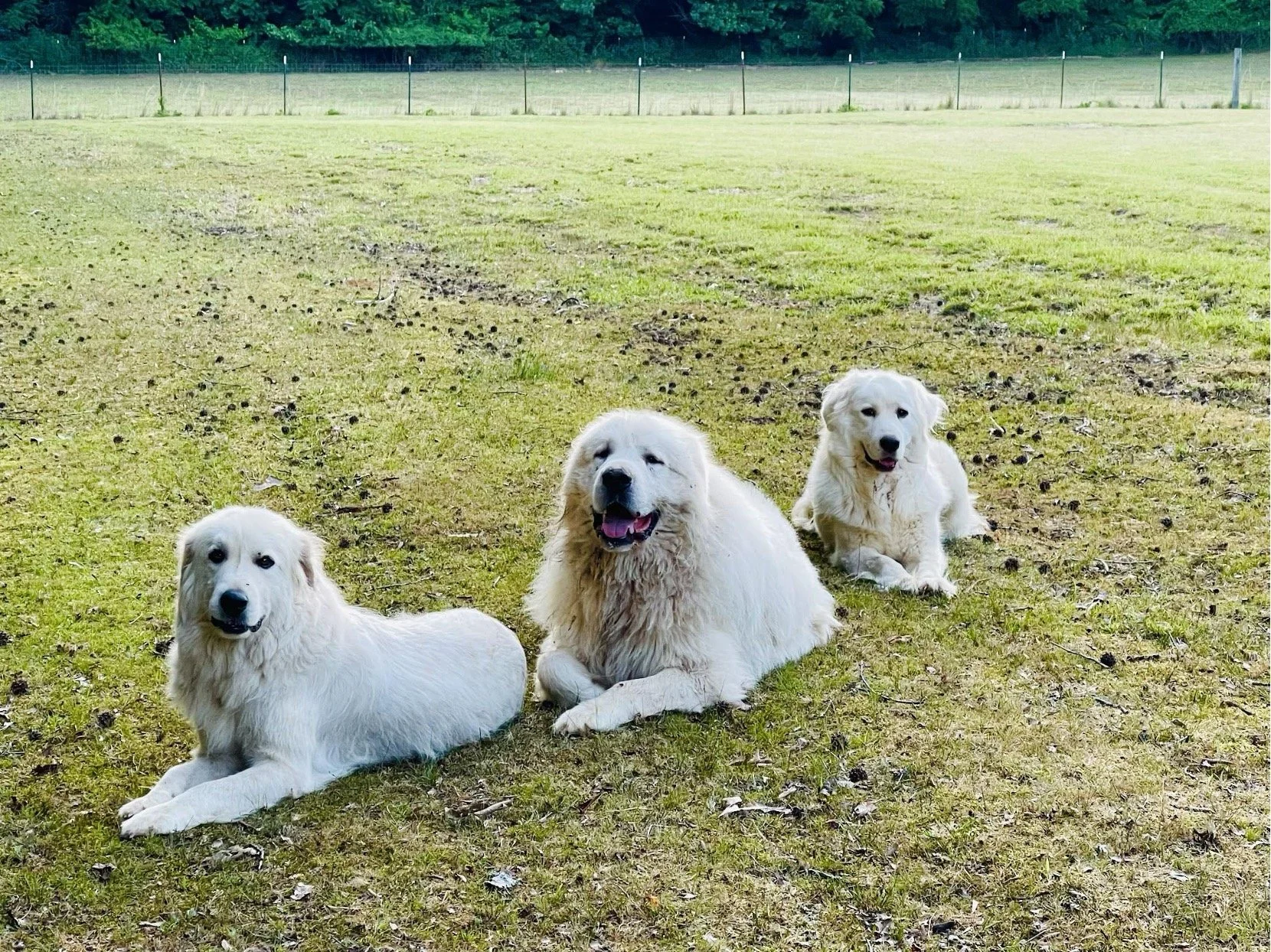
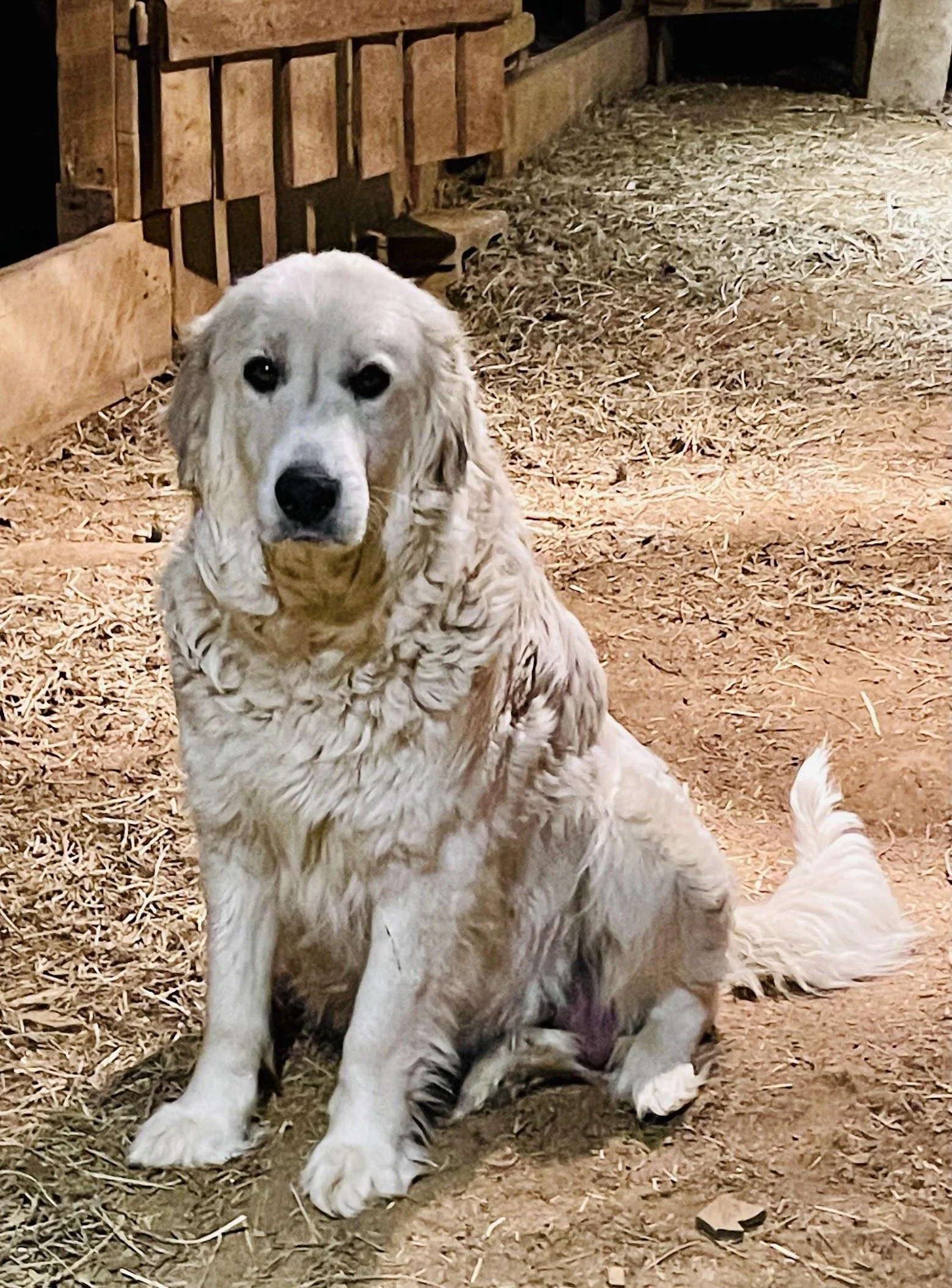
Livestock Guarding Dogs will bark the entire night. Livestock guarding dogs spend their after-dark hours on hyperalert for any possible threat. This makes sense because many western Tennessee predators are on the move from the time dusk falls until the early hours of the morning. How often has a pack of yipping banshees awakened us around midnight, especially in the fall and spring months?
Our Great Pyrenees spend the night pre-emptively barking their presence in order to alert predators that they are on patrol. Our dogs also respond in kind to any stray noise they do not recognize. I can drop a plate inside the house, and our dogs lounging over 100 yards away behind the barn will erupt in a loud frenzy.
2. Livestock Guarding Dogs will sleep most of the day. Because of their nocturnal protection, daytime is their primary rest period. Although they remain on alert and will follow the herd from barn to pasture and back again, they will fall over sound asleep at every opportunity. This is the only time I can “sneak up on them” as they lay spread across the ground, and when I do, they barely raise a head to glare at me with a look implying I have ruined a very good nap.
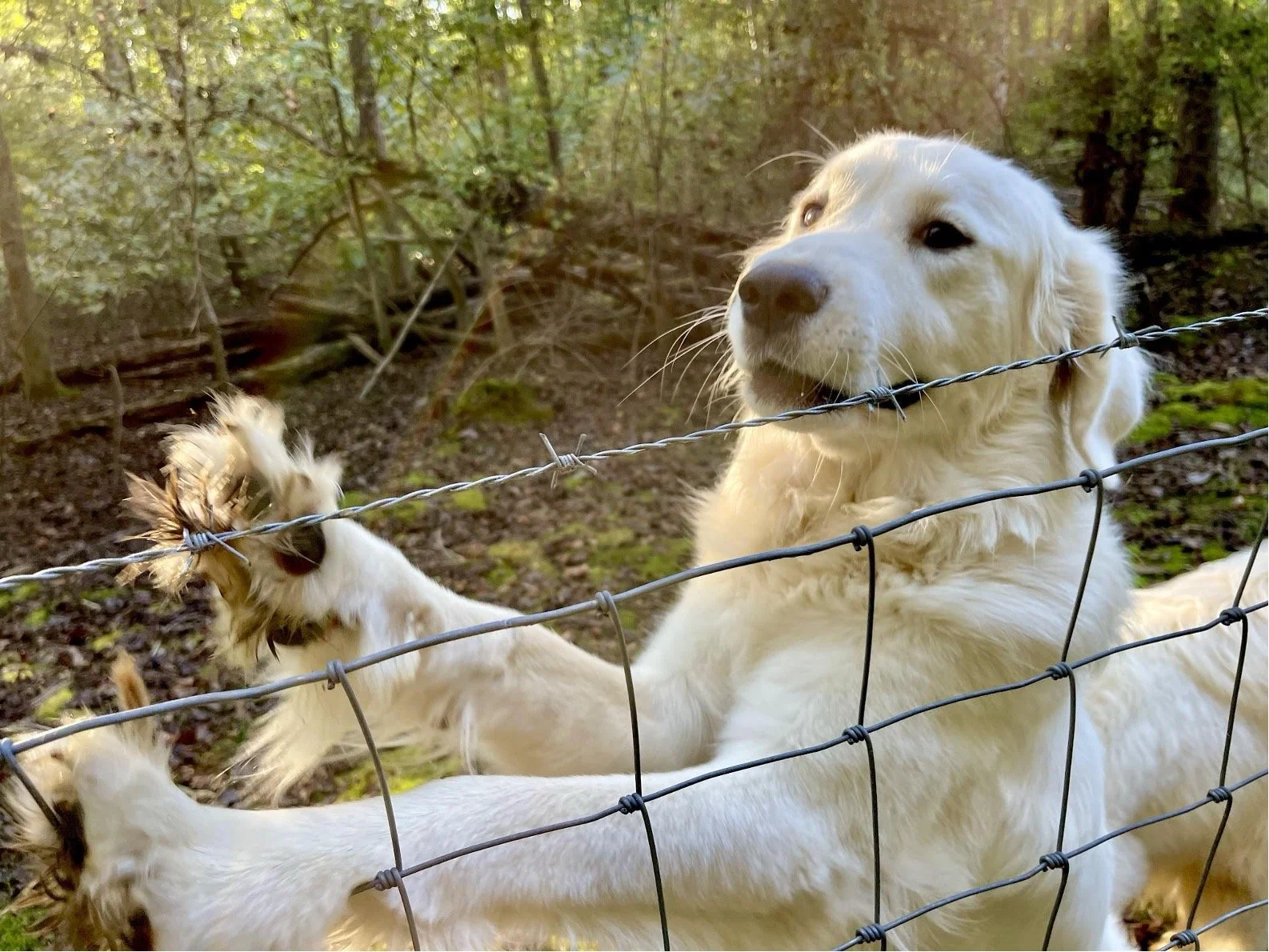
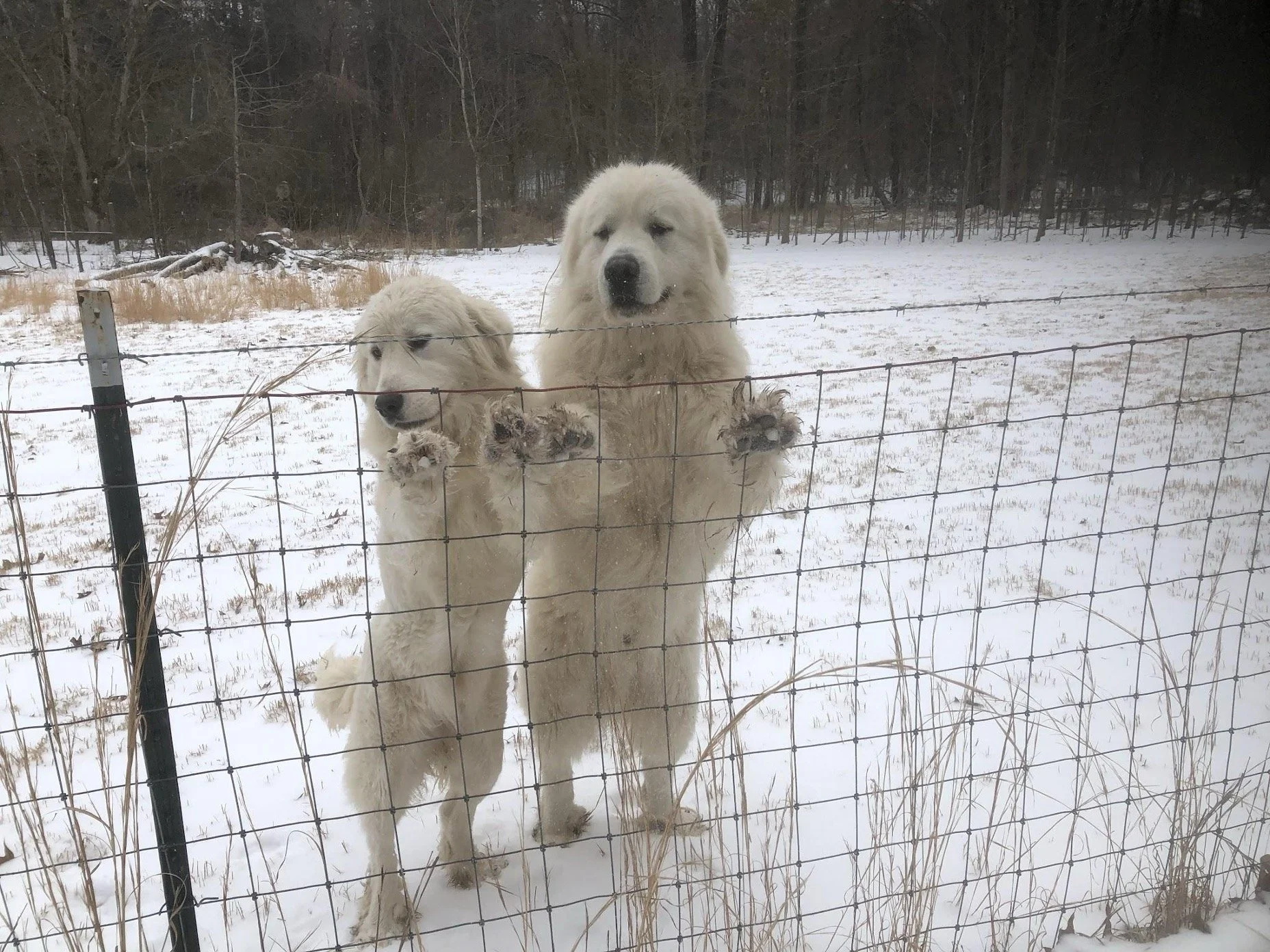
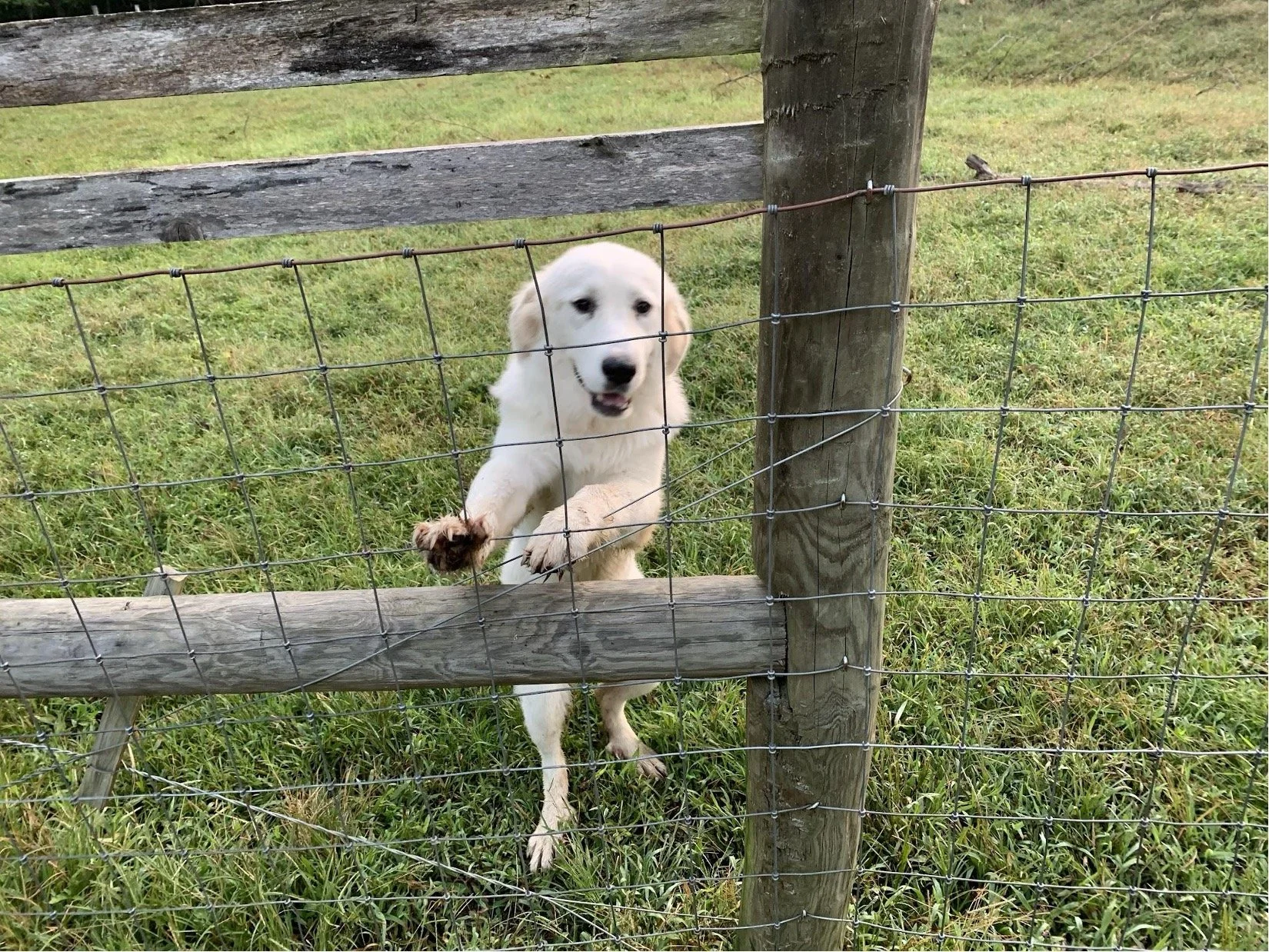
3. If they so desire, Livestock Guarding Dogs can find their way out of the pasture at any time. We maintain over two miles of sheep and goat fencing encompassing our pastures and woods, and inevitably we walk out our backdoor to find three Livestock Guarding Dogs waiting to greet us with tails wagging and sloppy grins.
How do they do it? Any variety of methods!
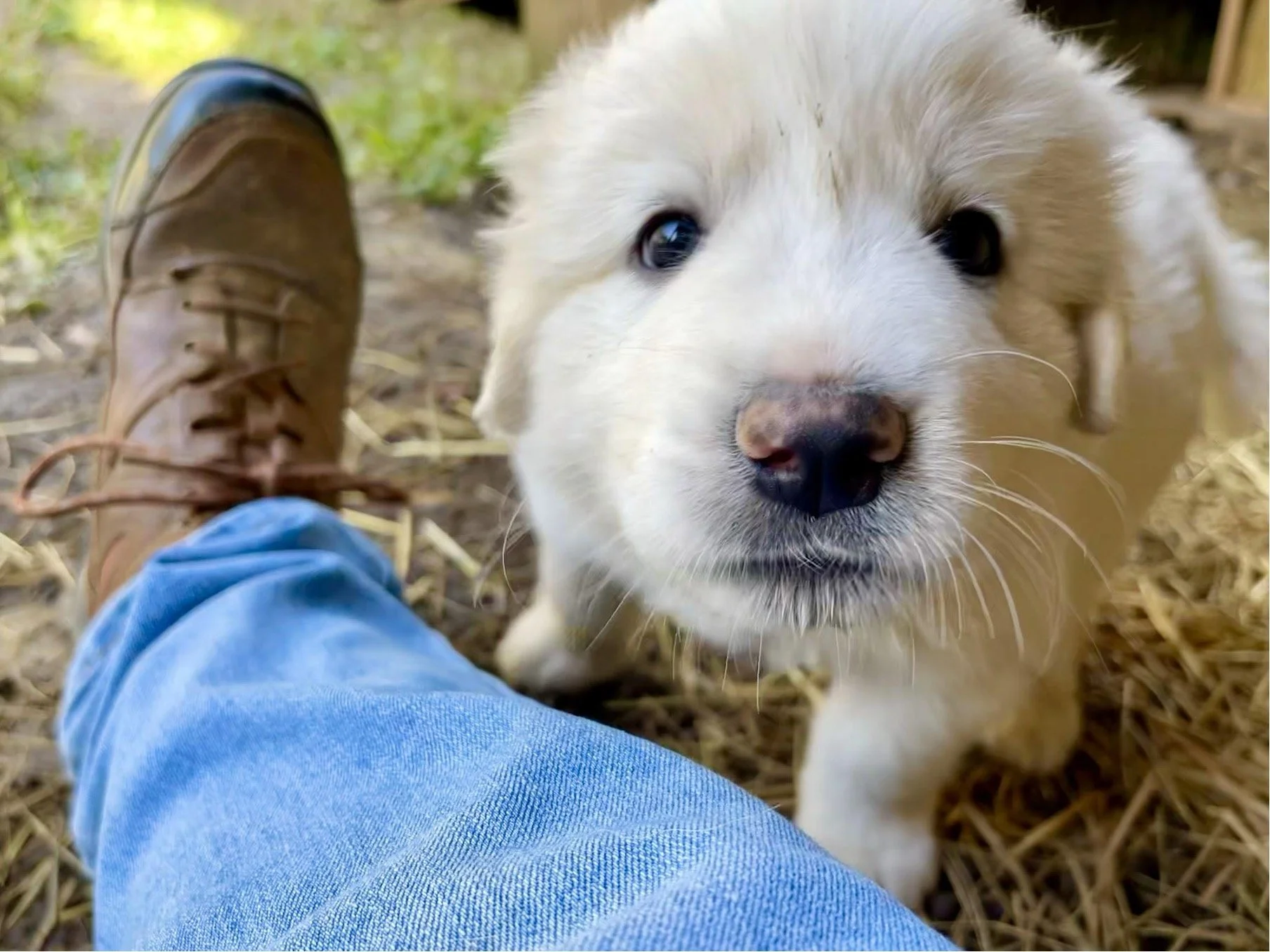
Our dogs enjoy digging under fence lines, no matter the location. Although they appear to be a thick, muscular breed of dog, Great Pyrenees are actually two layers of fur covering a slender body. Ours only need about four inches of clearance to slide under a fence. Although they can dig a hole to China, they may simply push aside a pile of leaves and sticks and slide through.
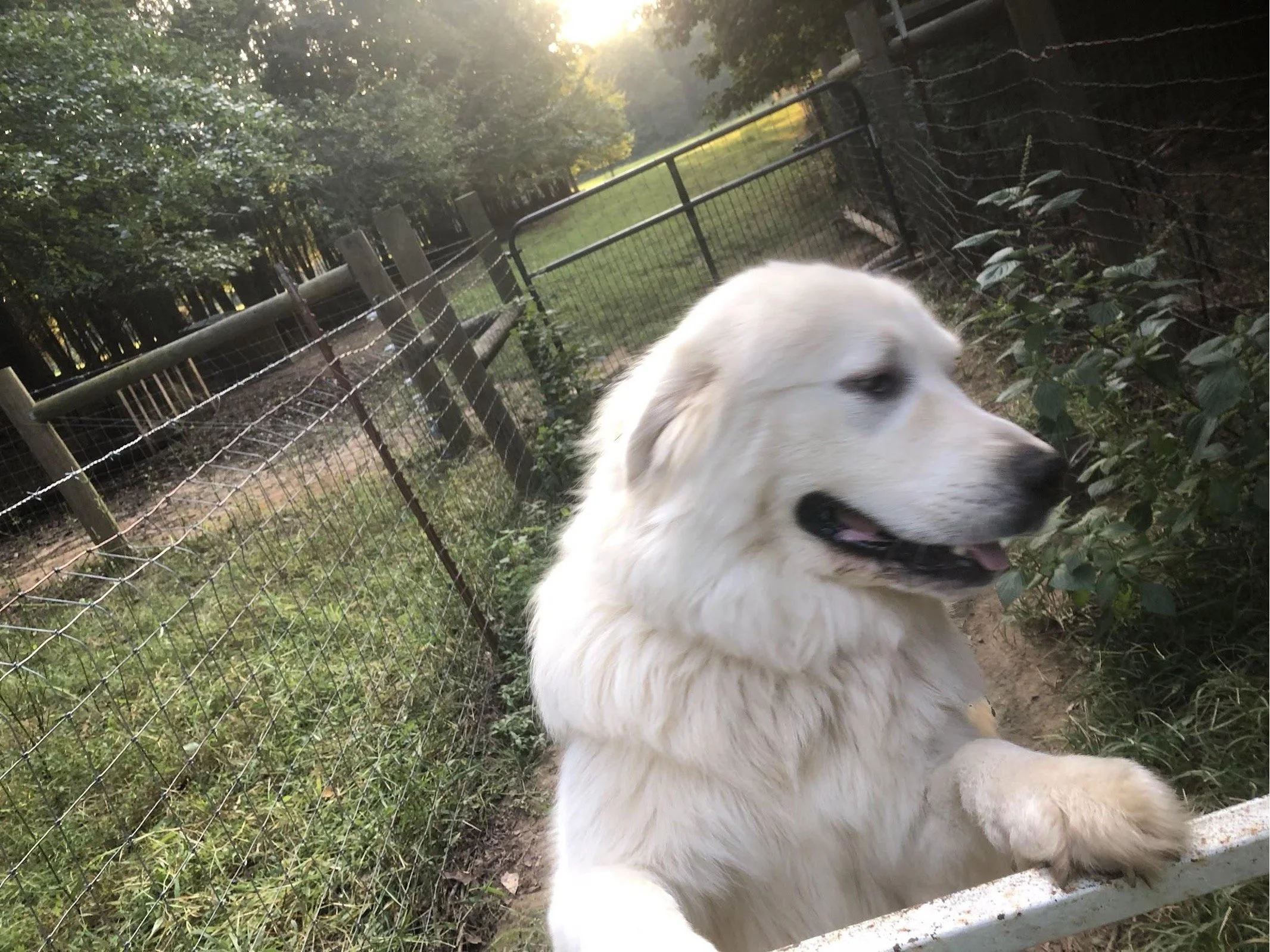
Our dogs can climb most fencing. We use a sturdy square-mesh sheep and goat fencing that stands fifty-two inches high with an additional barbed wire strand along the top. It doesn’t matter. If they want out, they will jump and push themselves over the top.
Our dogs are masters at testing gates for any give, then sliding through the narrowest of gaps between gate and post.
There is no rhyme or reason for our dogs’ schedule of escapism. They may stay in the pasture for two months solid during which we breathe many sighs of relief. Then we walk outside one morning to find them all sprawled across the back porch, looking like a bomb of white fur exploded across the boards. They smile their big goofy grins and willingly follow us from house to barn and through the gate back into the pasture. It’s never a problem getting them to return.
It’s a mystery. Or a game. We aren’t certain which!
4. Livestock Guarding Dogs resist obedience training. This is a working breed of dog that knows its role on the farm. If it suspects an intruder, the dog will not sit, stay, heel, come, or any other obedience command, but rather take off at a run to intercept the perceived threat.
5. If provoked, the Livestock Guarding Dog will not quiet down. I have sat on a porch at midnight with one of our first Great Pyrenees many, many nights begging him to please stop barking. He sits alertly at my side, his body pressed up against mine, and continues a rhythmic, steady barking I could set a timepiece by. It’s no use.
I have watched one of our fellows sit on the front porch and spend the day barking incessantly while intently studying the passing road. It’s a rural road with minimal traffic, and time and again I went outside to investigate if in fact an unseen ne’er-do-well was creeping up on me. Finally, I noticed a white plastic sack caught in the grasses along the edge of the road at least an 1/8th of a mile away. Stranger danger!
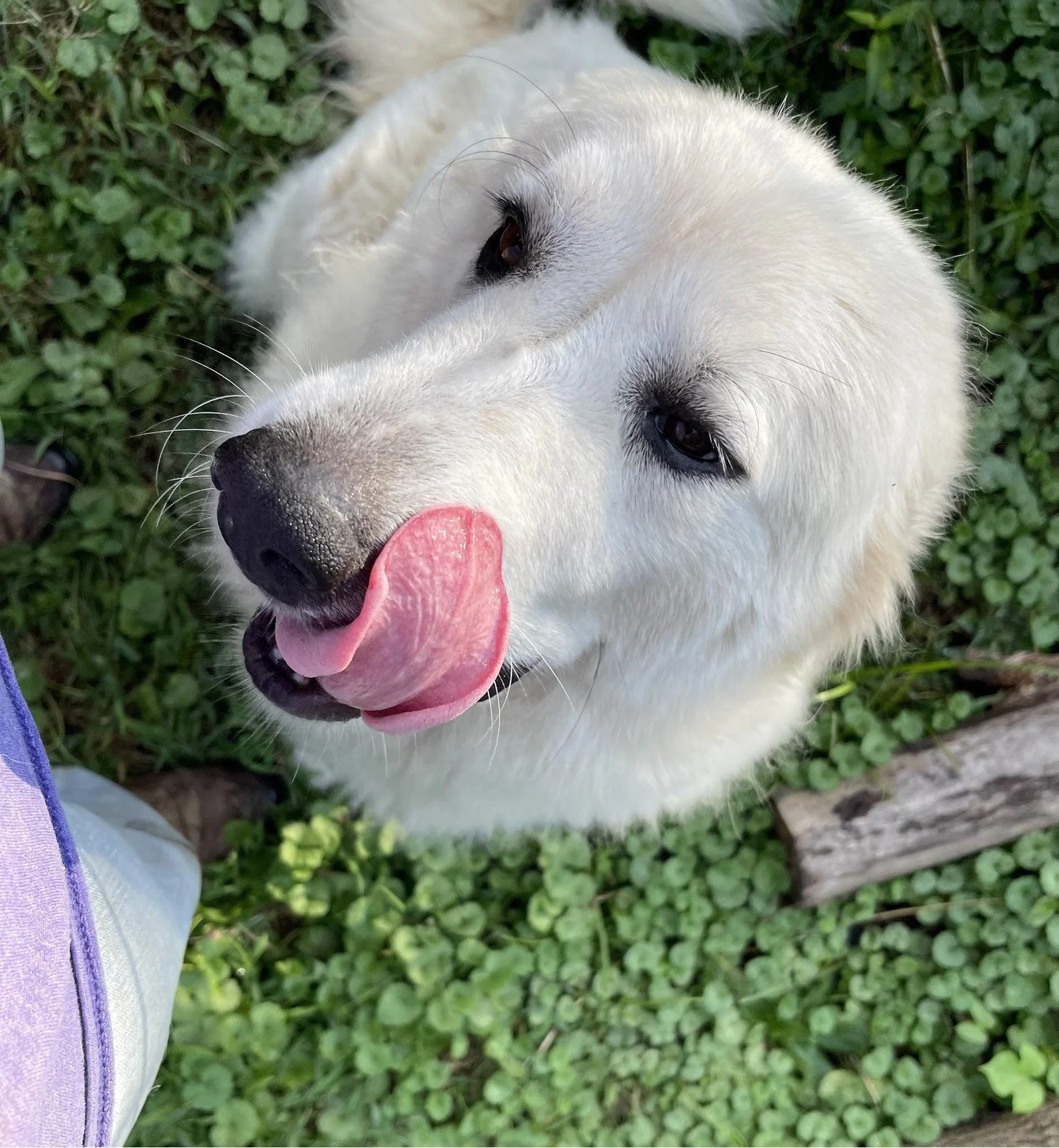
6. The Livestock Guarding Dog cannot be constrained. Our dogs love head scratches, ear scratches, and any manner of human attention from their farm family. However, we cannot constrain them. We cannot wrap our arms around their necks, hold tight their heads, or grab a paw. They have one job - protection - and they will resist any type of restraint that interferes with these guard duties. They will resist to the point of placing our hands or wrists inside their mouths, between their teeth. Because they understand our relationship, they will not bite down or draw blood, but they will inform us that boundaries exist and we must not interfere with their protective role.7. The Livestock Guarding Dog benefits from on-farm vet visits. We made the decision from puppyhood not to remove our Great Pyrenees from the farm so that there would be no confusion about the boundaries or their home and property. For annual rabies shots or any other vet services required, we make an appointment with our local farm vet for a farm housecall.
Although we highly value our Livestock Guarding Dogs as an integral part of our farm operations, we do recognize they pose significant challenges. Please do your research before adopting one into your family!